Cluster Pay Configurations and Their Influence on Session Payout Patterns in Sugar Rush, Reactoonz, and Wolf Gold
Henrik Patterson · Sep 25, 2026
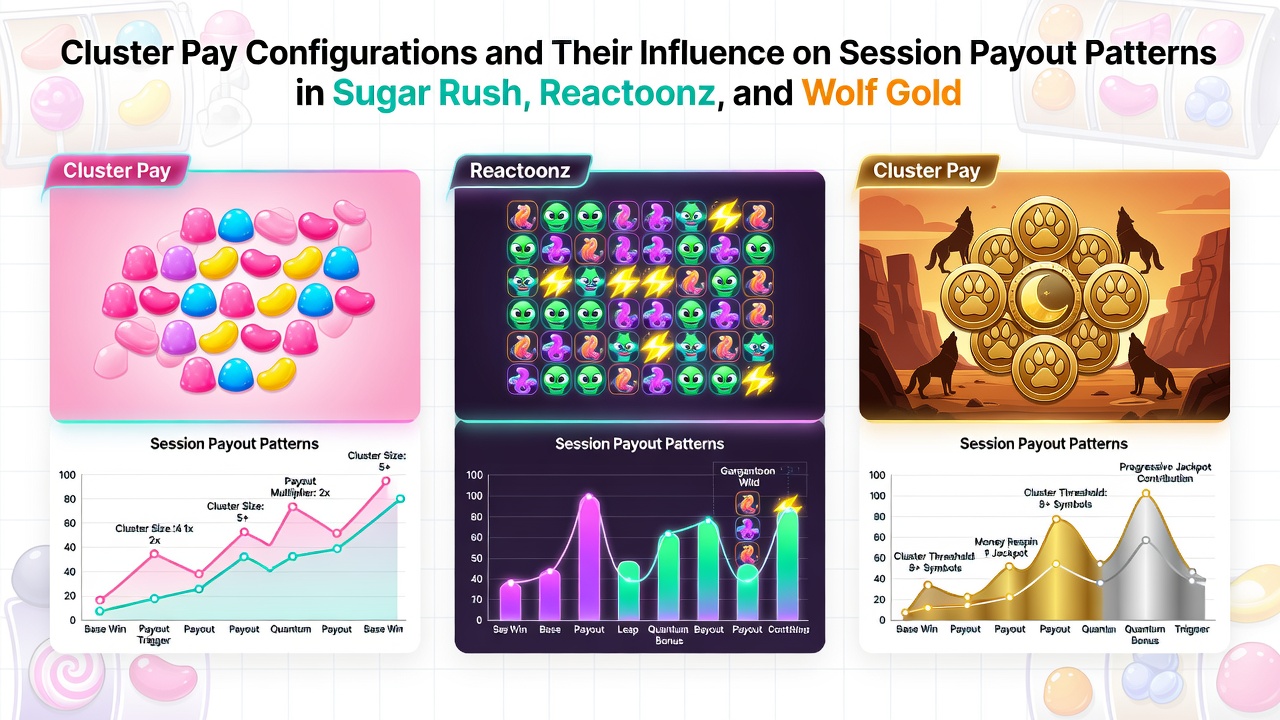
Cluster Pay Configurations and Their Influence on Session Payout Patterns in Sugar Rush, Reactoonz, and Wolf Gold
Understanding Cluster Pay Mechanics in Modern Slots
Cluster pay systems replace traditional paylines with adjacent symbol groups that form winning combinations when identical icons connect horizontally or vertically, and this structure alters how payouts accumulate during extended play sessions. Data from industry reports indicates that games using these configurations often generate more frequent but smaller base wins compared to fixed-line titles, while bonus features can amplify outcomes through multipliers and chain reactions. Observers note that session payout patterns shift because clusters require minimum group sizes, typically five or more symbols, which changes the probability distribution across reel spins.
Researchers at various gaming laboratories have documented how grid sizes and symbol frequencies interact with these rules, producing distinct variance profiles that players encounter in titles like Sugar Rush and Reactoonz. The configuration encourages cascading removals where matched clusters disappear and new symbols drop in, extending individual spins into multi-stage sequences that influence overall return metrics over time.
Sugar Rush Cluster Dynamics and Payout Distribution
Sugar Rush operates on a 7x7 grid where clusters of five or more matching symbols trigger wins, followed by tumbles that reposition remaining icons and allow additional formations within the same spin cycle. According to figures from European gaming analytics, this setup produces payout patterns marked by extended dry spells interrupted by sequences of connected clusters that build multipliers up to 128x when successive wins occur in the same position. The game's candy-themed symbols appear with frequencies that favor mid-grid connections, leading to session data showing higher hit rates during bonus rounds when multipliers persist across cascades.
Analyses of play records reveal that players experience clustered wins more often in the central reels, where symbol density supports larger groups, and this spatial bias contributes to the observed pattern of front-loaded payouts in longer sessions. External testing from regulatory bodies in Australia confirms the mathematical model maintains RTP consistency while the cluster rules distribute returns unevenly across individual rounds.
Reactoonz Quantum Features and Their Effect on Clusters
Reactoonz employs a similar 7x7 layout with cluster pays, yet its quantum wild mechanics introduce random wild symbols that expand or shift during cascades, modifying how clusters form and break apart. Studies from North American research institutions show these features increase the likelihood of oversized clusters exceeding ten symbols, which elevates payout variance within single spins while maintaining overall session stability. The alien character symbols and charge meter system further tie cluster outcomes to special events that trigger when enough energy accumulates, creating payout spikes that stand out against base game patterns.
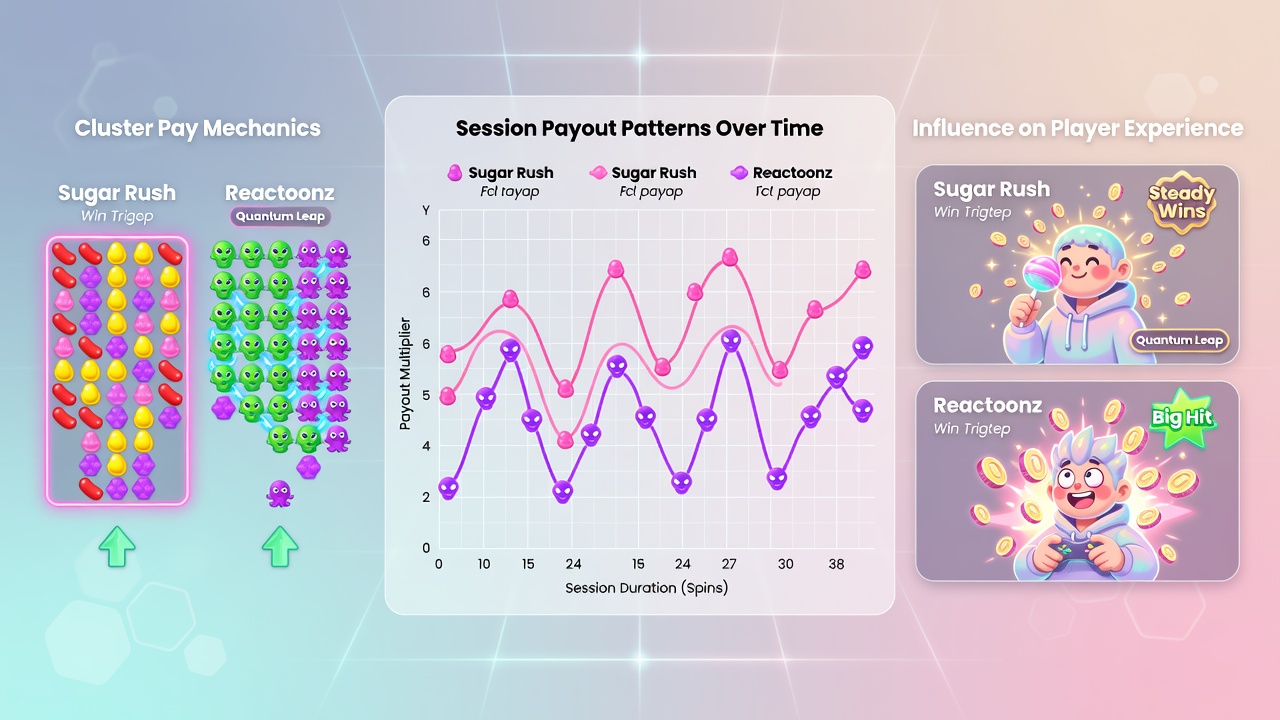
Those who have examined extensive spin logs note that Reactoonz sessions often feature periods of low activity followed by rapid cluster chains once the quantum modifiers activate, and this rhythm differs from purely tumble-driven games. Data compiled through 2025 and into September 2026 continues to track these interactions, highlighting how the added wild layers redistribute win sizes without altering the core cluster threshold requirements.
Contrasting Approaches in Wolf Gold and Payline Structures
Wolf Gold relies on a 5-reel format with 25 fixed paylines rather than cluster mechanics, which produces more predictable line-based wins that accumulate steadily across spins. This design choice leads to payout patterns where smaller combinations appear at regular intervals, contrasting sharply with the bursty sequences seen in cluster titles. Comparisons drawn from industry reports issued by Canadian regulatory agencies indicate that players encounter fewer extended cascades but benefit from consistent symbol alignments on designated lines, particularly during free spin modes that add stacked wilds.
The absence of cluster requirements means Wolf Gold sessions rarely experience the same spatial dependency on adjacent groups, resulting in payout distributions that favor volume over magnitude in base play. Observers tracking performance metrics across multiple jurisdictions have recorded how this payline approach smooths variance compared to the grid-based alternatives in Sugar Rush and Reactoonz.
Comparative Session Patterns Across the Three Titles
When examining aggregated data, cluster configurations in Sugar Rush and Reactoonz correlate with higher frequencies of multi-win spins due to tumbling effects, whereas Wolf Gold maintains steadier incremental returns through its line structure. Research from academic sources in the Asia-Pacific region demonstrates that these differences manifest in session length metrics, with cluster games showing more variable duration before significant payouts emerge. The influence extends to bonus integration, where cluster multipliers in the first two titles compound across cascades while Wolf Gold applies fixed multipliers to line wins.
Patterns observed in September 2026 updates from multiple testing labs continue to affirm that grid size and modifier presence drive the primary distinctions in how returns distribute over hundreds of spins. Players who review these configurations often discover that selecting between cluster and payline systems directly shapes expectations for short versus extended play periods.
Conclusion
Cluster pay systems in Sugar Rush and Reactoonz reshape session payout patterns through adjacency rules, cascades, and modifiers that differ markedly from the fixed-line mechanics in Wolf Gold. Available data from regulatory and research sources illustrates how these structural choices affect win frequency, size distribution, and overall session flow without changing core RTP values. Continued monitoring across global markets provides ongoing insight into these influences as game libraries expand.